

We make blended fuel pellets from waste biomass such as spent coffee grounds, khat stems, sawdust, coffee husks, etc. The collection and preprocessing of these ingredients has the potential to create thousands of jobs while removing an important source of pollution in the environment and reducing deforestation.

Once the waste biomass arrives at the factory, it is pre-processed to remove unwanted materials (e.g. stones, metal pieces) separately from each source. Bigger items are shredded to appropriate size using a chipper. Based on the different kinds of waste biomass available, we determine the proportion of each that goes into blended fuel pellet making. The blended material goes through a hammer mill to make it uniform in size. The latter is then fed to the pelletizing unit to make the blended pellets. The final product has an energy density of at least 16 MJ/kg and has a moisture content of less than 10%.
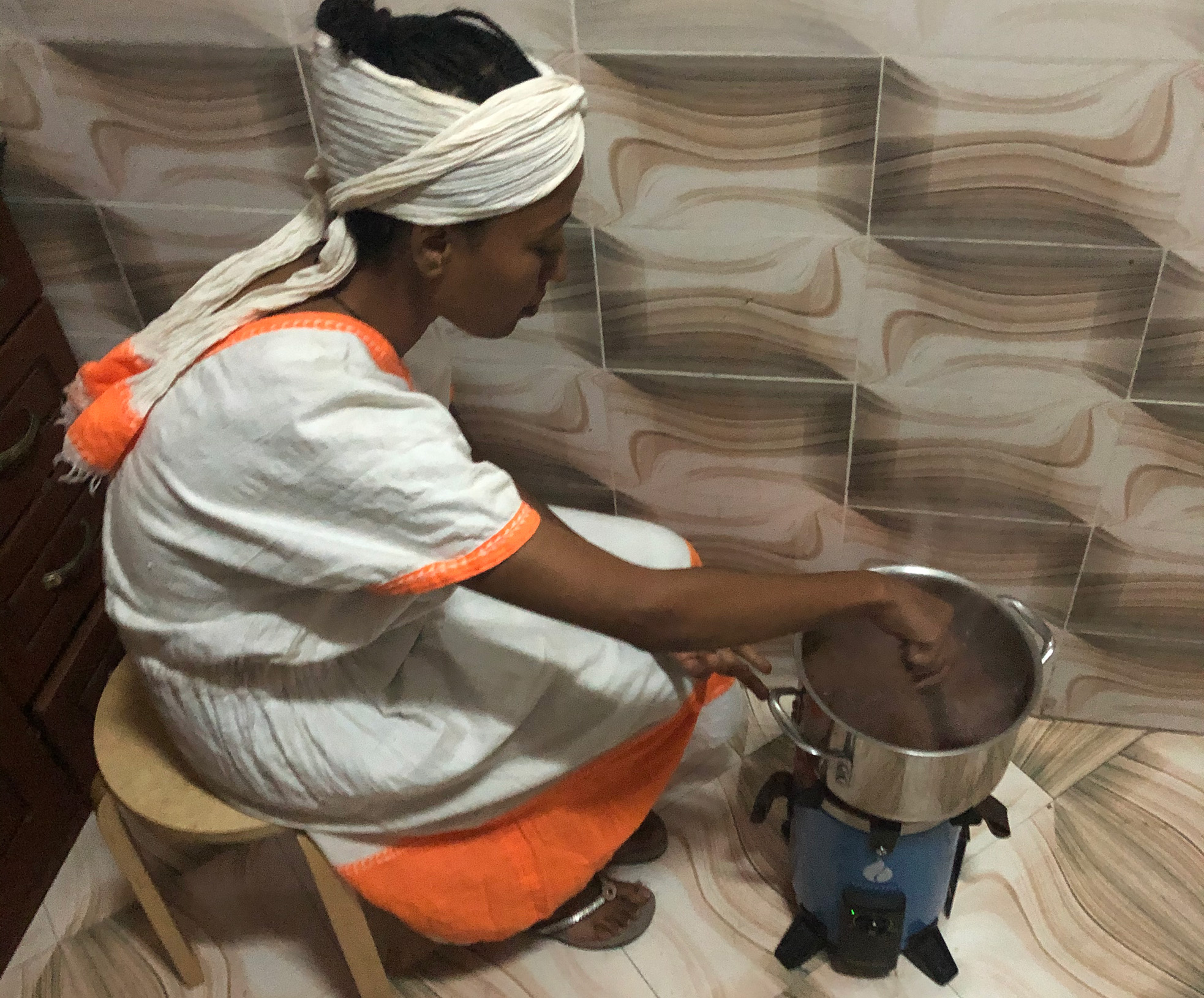
Our fan-forced household gasifier cookstove avoids the emission of at least 6 ton of CO2e per stove per year, assuming that the average household uses 1 kg of pellets per day. The commercial version has the same benefits but much larger. On average, our institutional cookstove is used 6 hours per day, meaning that the avoided emission is greater than 36 tons of CO2e per stove per year.

The by-product of burning our blended fuel pelllets is biochar (or charcoal). For every kilogram of pellets burned in our fan-forced household cookstoves, the customer can harvest approximately 0.25 kg of biochar. We exchange this biochar with equal amounts of fuel pellets. This not only reduces fuel costs to the customer by another 25%, the incorporation of the biochar into a biochar-based fertilizer helps to reduce nutrient leaching from the soil while sequestering carbon at the same time.
